Warriors and Adventure
- 4.6
- Rating
- 500.00K
- Installs
- Free
- Price
 Analysis by App-foxy
I approached Warriors Adventure expecting a lightweight word game, but its identity is a little more unusual than that. It is a free word-based idle RPG from Barnard Game, built around the idea that the adventure is communicated through text rather than a stream of illustrations. That choice gives it a distinct mood: instead of watching a character perform every action, I spend more time reading short pieces of information, making decisions, and letting progress continue in the background.
That format will not appeal to everyone. If you want a visually rich role-playing game with animated battles, detailed maps, and constant manual control, this is probably the wrong direction. If you enjoy idle progression, compact reading, and the feeling of managing an adventure without needing to stare at the screen, it has a more interesting proposition. My experience is that its strongest quality is not spectacle but the way it turns words into the main interface for a game loop.
How the current version feels to play
The current release is version 20, and that matters because the game feels like an established project rather than a first experiment. I found the basic concept easy to understand: the player is presented with an RPG adventure through written information, then checks progress and responds to the situations the game places in front of them. The idle structure means it is not designed around uninterrupted attention. It fits short visits better than long sessions where every second needs a manual action.
You May Also Like

 Blood Strike: 2.5 Anniversary
Blood Strike’s Loadouts Turn Every Drop Into a Tactical Gamble
A close look at Blood Strike’s custom loadouts: how fast access to signature weapons reshapes its battle royale rhythm, rewards preparation, and narrows the gap between fights.

 Pandora - Music & Podcasts
Pandora’s Music Is Easy to Start, but Harder to Recover
Pandora’s strength is its low-effort path from a seed to a station. Its weak spot is how much confidence it asks you to place in connection, setup, and quiet recovery.

 8 Ball Pool
 Is Built on Rivalries, Rematches, and Routine
A close look at the rivalries, rematches, shared routines, and unanswered safety questions that turn a quick pool match into a persistent mobile community.

 Samsung Music
’s Quiet Strength Is Playing What You Already Own
Its reach comes less from spectacle than from dependable access to a personal library. That simplicity is both the app’s strongest retention engine and its ceiling.

 AccuWeather: Weather Radar
AccuWeather Review: A Quick, Clear Forecast for Everyday Decisions
For everyday plans, the best forecast is the one you can understand quickly. AccuWeather makes rain timing, radar, and local conditions easy to act on, with a few trade-offs.

 Hill Climb Racing
Why Hill Climb Racing Still Turns Crashes Into One More Run
A tiny car, a bumpy hill and one more upgrade: Hill Climb Racing keeps resurfacing because its simple chaos makes every near-miss feel personal.
More From Our News Desk



That makes it particularly suitable for small gaps in the day. I can imagine opening it during a commute, checking what happened since the previous visit, making a few choices, and closing it without feeling that I have abandoned a complicated battle. It also works for people who like the idea of role-playing but do not want to learn a large control system. The text-first presentation reduces visual noise and lets the player concentrate on the consequences of each step.
At the same time, the word-based approach creates a clear trade-off. Text can suggest a world, but it does not provide the immediate feedback of animation, sound, or visual character design. When progress is mostly communicated through descriptions and menus, the player has to bring more imagination to the experience. I personally found that appealing in short bursts, though anyone who needs a strong visual reward after every action may find the presentation restrained.
The game is listed for devices running Android 6.0 or later, which keeps its technical entry point fairly broad. It is also marked for Teen audiences, so I would not treat it as a universal children’s game simply because the interface is text-based. The age label is useful for families deciding whether it fits a younger player, while the role-playing format is more naturally suited to teenagers and adults who enjoy managing gradual progress.
A word game that borrows the rhythm of an idle RPG
Calling it only a word game would undersell what it is trying to do. The words are not presented as isolated vocabulary puzzles in the usual sense. They form the surface of an adventure, with the player following a progression that feels closer to an RPG than to a traditional spelling challenge. That distinction is important when choosing it. Someone looking for crossword-style solving, an anagram board, or competitive word rounds should look elsewhere. The appeal here is the combination of reading and incremental character-oriented advancement.
What I liked most was the lower pressure. In a conventional action RPG, missing a moment can mean losing a battle or wasting a resource. An idle design gives the player permission to step away. I can check in before work, leave the game alone, and return later without expecting to maintain constant concentration. That makes it a good companion app for people who enjoy progression but have no interest in committing an entire evening to a session.
There is also a useful mental shift in treating the text as the game’s visual language. I started paying closer attention to the wording because it carries more of the atmosphere than it would in a normal menu. This is one of the less obvious strengths: the minimalist presentation can make small decisions feel more deliberate, provided the player enjoys reading rather than simply tapping through screens.
What version 20 tells me about its direction
The version number suggests that Barnard Game has continued refining the project beyond its original launch. The game was released on August 27, 2023, and its present version gives it a more mature starting point for new players than an untouched launch build would. I would still separate that observation from any promise about future updates. A version number shows ongoing development history, but it does not guarantee a particular feature, expansion, or timetable ahead.
For someone already playing, the practical effect of a newer version is mainly confidence that the app is being maintained as a living product rather than left at its first release. New players do not need to know the full history to understand the concept, but returning players may notice that the experience has been shaped over time. I would approach it with the expectation of a continuing idle RPG framework, not as a finished story package with a clearly defined endpoint.
The public response also indicates that the game has found a meaningful audience. It has passed 500K installs and holds an average rating of 4.5 from around 10K ratings, with 889 written reviews. Those figures do not prove that every player will enjoy the unusual format, but they do suggest that the text-led approach is not merely a niche experiment with no traction. I read that as encouragement for curious players who are unsure whether an RPG can work without image-heavy presentation.
Still, I would not use popularity as a substitute for fit. A visually focused player may install it, understand the idea, and still decide that the presentation is too quiet. Conversely, someone who likes incremental progress may appreciate it even if they normally avoid word games. The important question is not whether the concept is broadly popular, but whether reading and checking progress sounds enjoyable to you.
How to get more from short sessions
My first practical tip is to treat each visit as a review of the adventure’s state, not as a demand to exhaust every available action. Idle games can encourage repetitive checking, but the text-based format is better when I slow down enough to understand what the current situation is communicating. A quick glance followed by a purposeful decision feels more satisfying than tapping through everything simply because it is available.
A second useful habit is to create a simple check-in routine. For example, I would open the game at the beginning and end of a break rather than repeatedly reopening it every few minutes. That approach fits the idle structure and avoids turning a relaxed RPG into a notification-driven chore. It also makes changes in progress easier to notice because there is a meaningful gap between visits.
Third, I would avoid judging the game during only one very short launch session. Its appeal depends on gradual accumulation, and the text-first design may feel subdued before the player understands the rhythm. Give it enough time to see whether the combination of reading, waiting, and returning suits you. If the loop still feels empty after that adjustment, the problem is probably not a lack of understanding; it is likely a mismatch with your preferred style of play.
These habits also reveal an important trade-off. The less often I check, the more relaxed the game feels, but I may miss the satisfaction of responding immediately to a new development. Checking constantly gives more involvement, yet it can make the idle element feel pointless. The best balance depends on whether I want Warriors Adventure to be a background pastime or a small daily ritual.
Where it fits among other word and RPG games
Compared with a standard word puzzle, this game offers more of a continuing journey. A crossword or anagram app usually gives a clear problem, a solution, and a sense of completion. Here, the words support an ongoing role-playing structure, so the reward is less about solving one perfect puzzle and more about seeing an adventure move forward. Players who enjoy vocabulary challenges for their own sake may find the RPG layer distracting, while players who want context and progression may find ordinary word puzzles too isolated.
Compared with a conventional idle RPG, its main difference is presentation. Many idle role-playing games depend on character art, battle effects, equipment screens, and visual collections. Warriors Adventure asks the text and the player’s imagination to do more of that work. The result is less immediately flashy, but it can be easier to follow when I am using an older or less powerful device, or when I simply want something that does not dominate my attention visually.
It is also less suitable than a traditional RPG for players who want tactical combat at every moment. If your enjoyment comes from positioning units, timing abilities, or manually steering a battle, this game’s slower, more abstract approach may feel limited. On the other hand, if you like checking strategic progress without performing every action yourself, its restraint becomes an advantage rather than a weakness.
The free price makes experimentation straightforward, although the game includes optional in-app purchases ranging from $0.99 to $99.99 per item. That is a wide span, so I would recommend deciding in advance whether you want to play without spending or whether you are comfortable considering optional purchases. The free entry point is useful, but players who are sensitive to spending prompts should pay attention to the purchase flow and avoid treating every available shortcut as necessary.
Who should try it, and who should skip it
I would recommend it to a player who enjoys idle games but wants something less dependent on visual spectacle. It is also a good match for readers who like the idea of a fantasy adventure delivered in compact pieces, and for busy players who prefer progress that can be checked between other tasks. The game’s strongest audience is probably someone who enjoys a little imagination and does not need constant action to feel that a game is rewarding.
It may also work well for a person who usually finds RPG systems intimidating. Because the adventure is presented through words, the first impression is less crowded than the interface of a large role-playing game filled with icons and statistics. That does not mean there is no learning curve, but it lowers the visual barrier. I would suggest it to a friend who wants to try an RPG format while keeping sessions simple and flexible.
I would skip it if the main reason you play is to admire art, collect detailed character designs, or watch dramatic combat animations. I would also look for a different word game if your priority is competitive scoring, daily puzzle solving, or precise vocabulary practice. Finally, it is not ideal for anyone who dislikes waiting-based progression. The idle structure is not a small side feature; it shapes the pace and the way the player participates.
Limitations that become clearer over time
The biggest limitation is the same feature that makes the game distinctive: text carries a large share of the experience. When the writing or presentation does not immediately hold my attention, there are fewer visual elements to compensate. A conventional RPG can keep me engaged with movement, animation, and exploration; this game relies more heavily on whether I enjoy interpreting a compact written adventure.
The second limitation is the possibility of a shallow-feeling routine for players who want frequent decisions. Idle progress is convenient, but convenience can reduce involvement. I sometimes felt that the most enjoyable part was checking the state of the adventure, while the waiting between visits offered little for an impatient player to do. That is not a flaw for the intended audience, but it is a real weakness if you want continuous interaction.
There is also a risk of confusing simplicity with depth. The interface may be approachable, yet a text-led RPG still needs to give the player reasons to care about each return. If you prefer systems that reveal layers of tactics, equipment choices, or manual control, you may reach the limits of this format sooner than you would in a full-scale role-playing game. I would therefore think of it as a compact idle adventure rather than a replacement for a large RPG.
The purchase range deserves practical attention as well. Because the game is free to start but offers optional items up to $99.99, I would not recommend spending until you understand how much the basic loop already satisfies you. Play first, decide whether the waiting and checking rhythm works, and only then consider whether an optional purchase genuinely improves your experience. That is a better approach than assuming a paid item is required to enjoy the core concept.
What existing players and newcomers should watch
Newcomers should watch the game’s pacing during their first few returns, not just the opening minutes. The key test is whether you look forward to seeing what changed while you were away. If that small moment of anticipation feels good, the idle structure is probably working for you. If you keep opening the app only to find the waiting frustrating, a more active word or RPG game would be a better use of your time.
Existing players should pay attention to how future development affects the balance between simplicity and variety. The current version shows that the project has progressed since its release, but the most valuable improvements would be those that give returning players meaningful reasons to engage without turning the text-first design into a cluttered conventional RPG. I would welcome changes that deepen the adventure while preserving its readable, low-pressure identity.
I would also watch how comfortably the game handles different play styles. Some players will want a quick daily check, while others will want more frequent decisions. The best evolution would respect both groups without weakening the idle foundation. That is an expectation rather than a claim about planned features, but it is the standard I would use when judging whether future versions are improving the experience for established users.
For now, the safest way to approach it is as a focused experiment in presentation. It does not try to compete with image-heavy RPGs on their own terms. Instead, it asks whether an adventure can remain engaging when words, waiting, and player imagination do most of the work. That makes it more memorable than a generic idle title, even though it also makes its audience narrower.
My final view is positive but selective. Warriors Adventure is worth trying if you want a free, text-led idle RPG that fits into short daily sessions, especially when visual overload is something you would rather avoid. Barnard Game has created a concept with a clear personality, and the current release gives curious players a reasonable entry point. I would not recommend it as a substitute for a tactical RPG or a serious word-puzzle trainer, but for the right player, its quiet rhythm can be exactly what makes the adventure enjoyable.
FAQs for Warriors and Adventure
01What is the main objective of Warriors and Adventure?
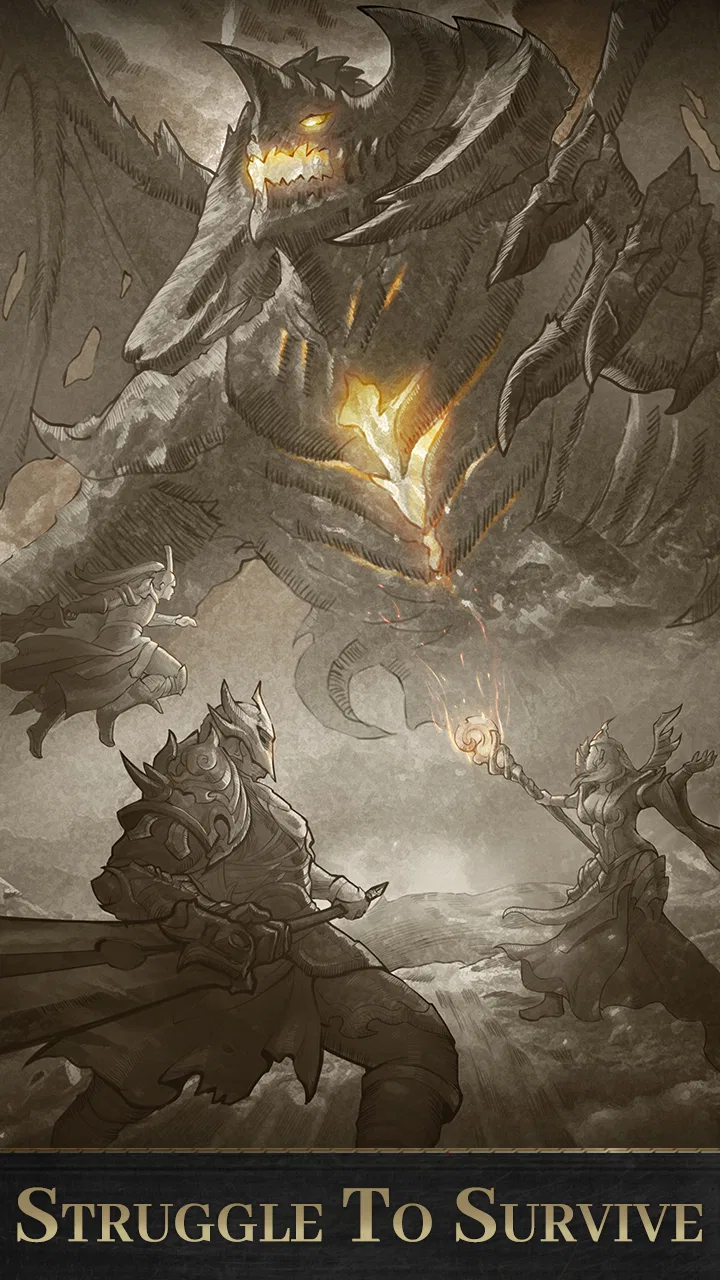
Warriors and Adventure is designed to immerse players in a fantasy world where they can embark on epic quests, battle mythical creatures, and explore vast landscapes. The main objective is to complete missions, gather resources, and strengthen your character by leveling up and acquiring powerful equipment.
02Is Warriors and Adventure free to play?
Yes, Warriors and Adventure is free to download and play. However, it offers in-app purchases for players who wish to enhance their gaming experience by acquiring special items, unlocking premium features, or gaining faster progression. These purchases are optional and not necessary to enjoy the core game.
03What are the system requirements for Warriors and Adventure?
Warriors and Adventure requires iOS 11.0 or later for Apple devices and Android 6.0 or higher for Android devices. It is recommended to have at least 2GB of RAM for optimal performance. Ensure your device has sufficient storage space to accommodate the app's ongoing updates and data.
04Does Warriors and Adventure require an internet connection?
Yes, an active internet connection is required to play Warriors and Adventure. This ensures seamless gameplay, access to online features, and the ability to participate in multiplayer modes. A stable Wi-Fi connection is recommended for the best experience, especially during large downloads or updates.
05Are there multiplayer features in Warriors and Adventure?
Absolutely! Warriors and Adventure includes various multiplayer features, allowing you to team up with friends or other players globally. Engage in cooperative missions, participate in PvP battles, or join guilds to collaborate and strategize with others. Multiplayer modes enrich the gaming experience by adding social and competitive elements.
Pros
- Engaging storyline with dynamic quests.
- Stunning graphics and immersive design.
- Varied character classes and skills.
- Real-time multiplayer battles enhance gameplay.
- Frequent updates with new content.
Cons
- Can be resource-intensive on devices.
- In-app purchases can become costly.
- Requires constant internet connection.
- Learning curve for new players.
- Occasional bugs disrupt experience.

Warriors and Adventure
Gallery